Calm Your Mind: Guided Meditations for Anxiety Relief
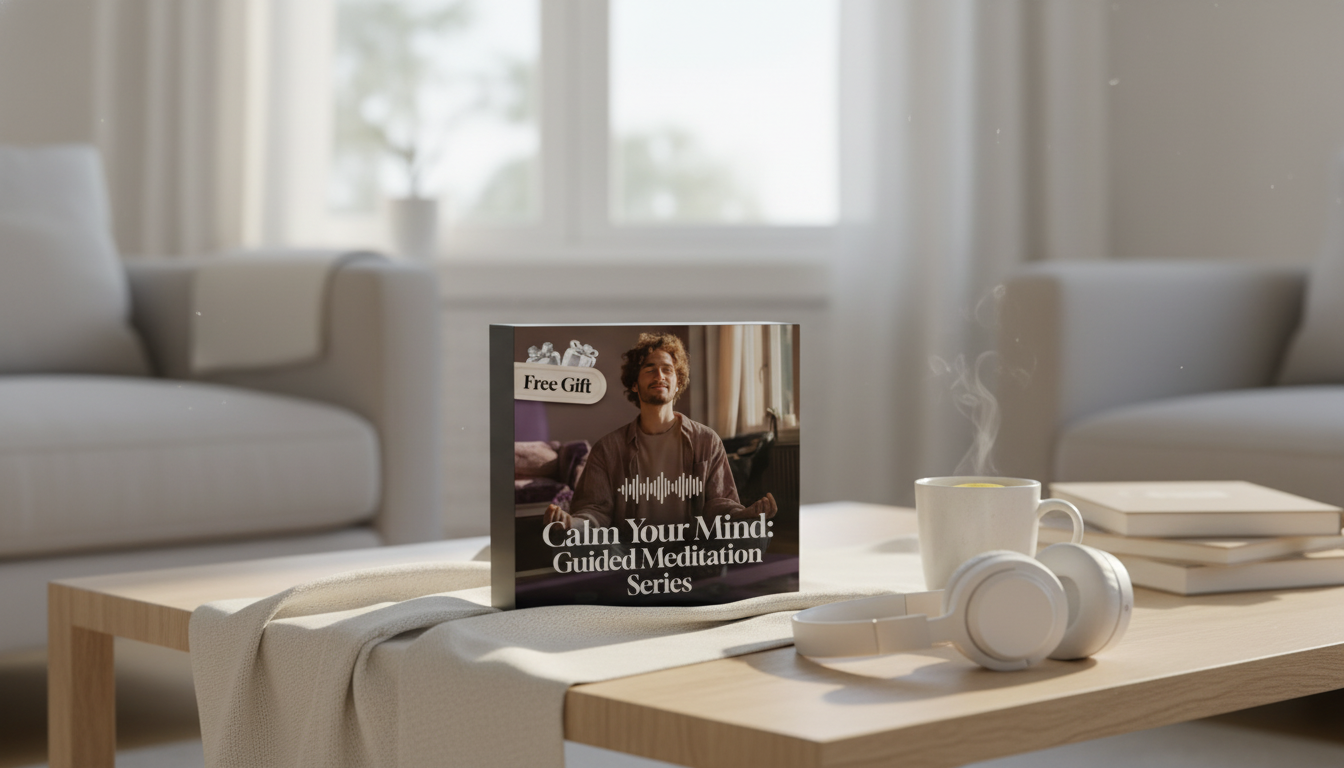
Calm Your Mind: Guided Meditation Series for Anxiety Relief
A racing mind can show up as tension in the body, shallow breathing, and thoughts that loop. Guided meditation helps by giving attention a simple job—listen, breathe, and return—so the nervous system can shift from high alert toward steadier calm. This guided audio series is designed for anxious moments, busy days, and bedtime wind-downs, with practical sessions that fit real life.
What “a busy mind” looks like in everyday life
Anxiety doesn’t always feel like panic. For many people, it’s a constant hum of mental noise—subtle, persistent, and exhausting. Some of the most common signs include mental chatter, worry spirals, irritability, trouble focusing, and difficulty falling asleep (or staying asleep once the mind starts replaying the day).
The body often “speaks” alongside anxious thinking. You might notice a tight jaw or shoulders, a heavy chest sensation, stomach fluttering, or restless energy that makes it hard to sit still. When that happens, quick fixes can feel tempting—scrolling, snacking, pushing through, staying busy—yet the relief is often temporary because attention gets pulled back to the same triggers without a repeatable calming routine.
A realistic goal isn’t to never feel anxious. It’s fewer spikes, faster recovery, and more choice in how to respond when the mind revs up.
How guided meditation supports anxiety relief
Guided meditation is a practical kind of attention training. Instead of trying to “empty your mind,” you practice returning to a steady anchor—like breath, sound, or body sensation—each time you notice you’ve drifted. Over time, that returning can reduce rumination and make anxious loops less sticky.
It also supports a nervous system downshift. Slower breathing, relaxed posture, and gentle prompts can nudge the body toward a calmer physiological state. Many people find it easier to regulate emotions when they can label what’s happening (“worry,” “planning,” “fear”) and recognize that thoughts and sensations are temporary, not permanent truths.
Consistency matters more than duration. Short daily sessions often outperform occasional long sessions, especially when anxiety is your main concern. For evidence-informed overviews, see resources from NCCIH, the American Psychological Association, and Mayo Clinic.
Guided meditation techniques and when to use them
| Technique | Best time to use | What it helps with | Simple cue to try |
|---|---|---|---|
| Breath-focused guidance | During a stress spike | Racing thoughts and agitation | Exhale a little longer than the inhale |
| Body scan | After work or before bed | Tension and restlessness | Relax forehead, unclench jaw, soften shoulders |
| Grounding with sound | When feeling overwhelmed | Feeling scattered or overstimulated | Name 3 sounds and return to the audio voice |
| Loving-kindness style practice | After conflict or self-criticism | Harsh inner talk | Repeat a gentle phrase on each breath |
Inside the Calm Your Mind guided meditation audio course
Calm Your Mind: Guided Meditation Series | Audio Course | Anxiety Relief Meditation is built for real-world anxiety moments—when you don’t want to figure out what to do next, you just want to feel steadier. Guided sessions make starting easy: press play, follow along, and return when attention drifts.
The series format encourages practice because you can repeat sessions based on mood, time available, or trigger type. Supportive pacing helps anxious states feel less daunting: a steady voice, clear prompts, and fewer decisions to make while you’re already overwhelmed. It also works well for beginners and for experienced meditators who want structure during stressful stretches.
For extra-short days, pair it with a quick reset track like 5-Minute Reset for Exhausted Parents (3 in 1) | Audio Course | Mindfulness Breathing, Emotional Reset & Energy Boost—a compact option when time and energy are limited.
A simple routine: 7 minutes to calmer thinking
When anxiety hits, it helps to have a tiny routine you can repeat without negotiating with your mind. Try this 7-minute structure (with or without audio):
- Set up (30 seconds): Sit or lie down; loosen shoulders; place one hand on the belly if helpful.
- Breathing (2 minutes): Slow inhale through the nose; longer, softer exhale; allow the face to relax.
- Notice and name (2 minutes): Label what’s present—“thinking,” “worry,” “planning”—then return to the guide or a single anchor.
- Body release (2 minutes): Scan from forehead to feet; soften one area per exhale.
- Close (30 seconds): Choose one intention for the next hour—“steady,” “patient,” or “one thing at a time.”
When to use guided audio (and when to choose something else)
Guided audio is especially useful when you want to be led—commuting (hands-free), pre-sleep wind-down, post-meeting decompression, or a midday reset between tasks. If the mind feels too activated to sit down right away, try a brief grounding action first: sip water, look out a window and name what you see, or feel your feet on the floor for 20 seconds—then press play.
Practical tips to get more out of each session
Product details at a glance
Calm Your Mind: quick overview
| Feature | What it means for daily use |
|---|---|
| Guided audio sessions | Less effort to start; follow the voice instead of planning your own practice |
| Series structure | Builds consistency and makes it easier to return on difficult days |
| Anxiety-focused calming cues | Supports downshifting from worry loops into steadier breathing and attention |
| On-demand access | Use anytime: morning reset, midday break, or bedtime routine |
FAQ
How can I calm my mind?
Try a simple sequence: slow the exhale, feel one body sensation (like feet on the floor), label the thought (“worry” or “planning”), and return attention to one anchor (breath or a guided voice). Guided meditation makes this easier by giving your mind a clear, repeatable structure—consistency is what builds results.










Leave a comment