Safe Space Mapping: Create a Calm Plan for Stress
What “Safe Space” Means (and What It Doesn’t)
A “safe space” is less about perfection and more about nervous-system reality: it’s any context where your body can settle because threats feel lower, boundaries feel clearer, and support feels more reliable. For some people that’s a quiet room; for others it’s movement outdoors, a familiar voice, or a predictable routine.
Safety can show up in multiple layers at once:
- Physical safety: the environment (lighting, exits, noise, privacy, temperature).
- Relational safety: the people involved (respect, consent, consistency, no ridicule).
- Emotional safety: permission to feel without being punished, rushed, or “fixed.”
- Digital safety: online settings and content that reduce threat cues and protect attention.
A safe space is not the same as avoidance. Avoidance shrinks life over time; safe spaces support recovery so you can return to a conversation, task, or challenge with more capacity. And safety is personal and changeable—what feels safe can shift across seasons, identities, relationships, and experiences. Trauma-informed resources (like SAMHSA’s overview of trauma-informed care) emphasize that safety is foundational, not optional.
The Core Idea of Safe Space Mapping
Safe space mapping turns a vague goal (“feel safe”) into a workable plan (“go here, do this, reach out to them”). Instead of relying on willpower while stressed, you pre-decide the options that reliably lower intensity.
A complete map often includes:
- Places: where you can go (or where you can pause).
- People: who helps and how.
- Sensory cues: sound, light, scent, warmth, pressure, movement.
- Routines: short sequences that signal “reset.”
- Boundaries: what you limit and what you permit yourself to do.
- Backup options: what you use when Plan A isn’t available.
Include both micro-safe spaces (30–180 seconds) and macro-safe spaces (30–90 minutes). Use your map proactively to build capacity, and reactively when you need to de-escalate during stress. If you want a clinical grounding for stress coping basics, NIMH’s guide on coping with stress is a helpful reference point.
Step-by-Step: Build Your Safe Space Map
Step 1 — Notice signals
List early signs of overwhelm (tight chest, racing thoughts, irritability, shutdown, urge to scroll). The earlier you catch the shift, the smaller your intervention can be.
Step 2 — Identify anchors
Choose 3–5 reliable calming inputs: warm drink, weighted blanket, music, lighting change, paced breathing, stepping outside, or a brief stretch.
Step 3 — List locations
Step 4 — List people
Step 5 — Add boundaries
Include what needs to be limited (topics, time, noise, screens, visitors) and what permission you need (to leave, to say no, to pause a conversation). Psychological safety is closely tied to whether people can speak up and set limits without backlash (see the APA definition of psychological safety).
Step 6 — Create a quick-access version
Step 7 — Test and revise weekly
| Category | Options | When to Use | What to Prepare | One Boundary |
|---|---|---|---|---|
| Micro-safe space (1–3 min) | Step outside; hand on chest; slow exhale | Early stress signs; before responding to messages | Phone on Do Not Disturb; water nearby | No multitasking while regulating |
| Home base (10–30 min) | Bedroom corner; soft lighting; blanket | After conflict; end of day | Lamp; playlist; comfort item | No problem-solving for 15 minutes |
| Outdoor reset (10–45 min) | Walk route; park bench; garden | Restlessness; rumination | Shoes; podcast/music; sunscreen | No work calls during the walk |
| Relational support | Text a friend; call a sibling; therapist session | Loneliness; spiraling thoughts | Draft a “what I need” message | Ask before venting or requesting advice |
| Digital safe space | Curated playlists; calming apps; filtered feeds | Evening wind-down; overwhelm | Mute lists; blocked keywords; saved resources | No doomscrolling after 9 pm |
Designing a Physical Safe Space at Home (Even in Small Spaces)
Creating Relational Safe Spaces: People, Communication, and Consent
Digital Safe Spaces: Curate, Filter, and Protect Attention
How to Use Your Map in Real Life (Before, During, After Stress)
Common Challenges and Simple Fixes
Using Guided Tools as a Working Companion
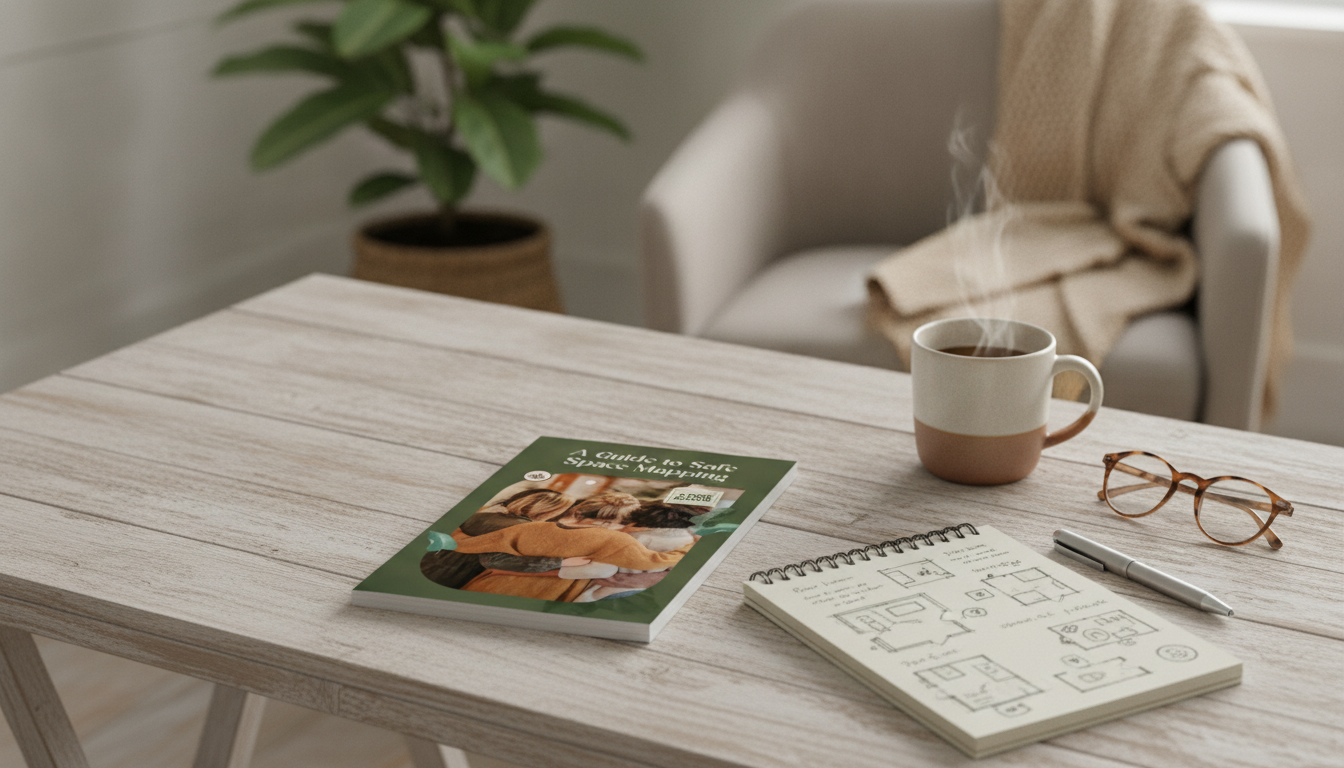
If you prefer structured prompts, A Guide to Safe Space Mapping | Digital Ebook on Understanding, Creating & Using Safe Spaces is designed to help you build a personal map that includes physical, relational, and digital options—plus a quick-access version for high-stress moments.
For days when time is the biggest barrier, 5-Minute Reset for Exhausted Parents (3 in 1) | Audio Course fits into real transition points (before school pickup, during naptime, after bedtime) so the reset becomes more automatic.
And if nighttime stress is part of your household rhythm, What to Do When Your Toddler Has Nightmares | Ebook Guide for Parents can support a calmer bedtime plan—often a major piece of “home base” safety for both kids and adults.
FAQ
What if a safe space doesn’t exist where someone lives or works?
Start with micro-safe spaces and neutral safety: reduce stimulation, add warmth and hydration, and use portable tools like headphones or a small grounding object. Pair that with boundary scripts (“I can talk in 10 minutes”) and gradually build a small network of supportive contacts, even if it’s just one reliable person.
How is safe space mapping different from avoidance?
Safe space mapping is time-limited and goal-oriented: it helps you regulate so you can return to the task, conversation, or decision with more capacity. For example, taking a 3-minute reset before replying to a message is recovery—not disengaging from the relationship.
Can safe space mapping help with parenting stress and overstimulation?
Yes—especially when you pre-plan 60-second resets, simple sensory adjustments (lower lights, reduce noise), and quick handoffs if another adult is available. Consistent mini-routines and short scripts (“I’m taking one minute to breathe”) often work better than trying to find a long break.










Leave a comment